A deep clean goes beyond routine dusting and vacuuming to cover baseboards, fixtures, grout, appliance exteriors, and high-touch surfaces throughout the home. It also targets accumulated grease, soap residue, and dust in accessible areas that regular upkeep can miss.
But if the counters shine and the floors look clean, does that mean someone cleaned behind the toilet or along the cabinet edges? Not necessarily. The useful answer to what does a deep clean include is a room-by-room scope that separates standard tasks, paid extras, and work the cleaner won't perform.
Room-by-Room Deep Clean Checklist
| Room | Typically included | Often missed |
|---|---|---|
| Kitchen | Countertops, sink basins, stovetop, backsplash, appliance exteriors, floor edges | Tops of cabinet fronts, range hood filter |
| Bathrooms | Showers, tubs, tile grout, toilet inside and out, mirrors, chrome fixtures, vanity counters, floor tiles | Exhaust fan covers, behind the toilet base |
| Bedrooms | Ceiling fans, ledges, baseboards, carpet vacuuming, furniture wiping, light switches | Mattress surfaces, windowsills |
| Living areas | Baseboards, trim, upholstery crevices, furniture surfaces, light switches, accessible areas under furniture | Lampshades, light fixtures |
| Entryways and hallways | Door frames, handles, light switches, railings, floor edges | Top edges of door frames |
| Whole home | Vents and air registers, high-touch points, hard floors after dusting | Filters and vents that affect air quality |
Treat this as a scope checklist, not a universal service contract. The “Often missed” column identifies places to discuss before booking, not tasks automatically included in every deep clean. In its 2025 fall-cleaning survey, the American Cleaning Institute reported that 38% of surveyed U.S. adults forget baseboards, while 39% forget vents or air registers.
Kitchens and bathrooms
In the kitchen, concentrate on grease removal, sink cleaning, and appliance exteriors. A cleaner should work along the stovetop edges and backsplash, wipe appliance handles and fronts, and remove debris where the floor meets the cabinets. Countertop and sink sanitizing should use a product suitable for the surface and, where applicable, food-contact areas.
An appliance exterior doesn't include its interior. Wiping the refrigerator door won't remove spills beneath the produce drawers, and cleaning the oven front won't address baked-on grease inside.
Bathrooms need attention to shower walls, tubs, grout, and fixtures, followed by the toilet inside and out. Mirrors and chrome should be finished without streaks, while vanity surfaces and floor tiles need soil and residue removed. For stubborn marks, our guide to cleaning bathtub stains helps distinguish cleaning problems from marks that need a different approach.
Sleeping spaces, shared rooms, and passageways
Bedrooms and living areas need more than a pass across the open carpet. Use a vacuum crevice attachment along upholstery seams and accessible floor edges, dust furniture and ledges, and wipe switches without spraying liquid directly into electrical fittings. Empty wastebaskets and finish hard floors after dust removal.
Entryways and hallways deserve their own check. Door frames, handles, railings, and the floor edges near shoe storage are easy to overlook when attention stays on larger rooms.
- Overhead surfaces: Include safely accessible ceiling fans, upper ledges, and register covers.
- Furniture access: Specify whether the cleaner will reach beneath stationary pieces or move lightweight items.
- Material limits: Identify delicate lampshades, unfinished wood, loose grout, and damaged finishes before work starts.
Practical rule: Accessible means safely reachable without dismantling equipment or moving something the team hasn't agreed to handle.
Compare the checklist with your home, then mark rooms with extra grime, extensive shelving, or extra floor space. Those details help define the work more accurately than the room name alone.
How a Deep Clean Differs From Routine Cleaning
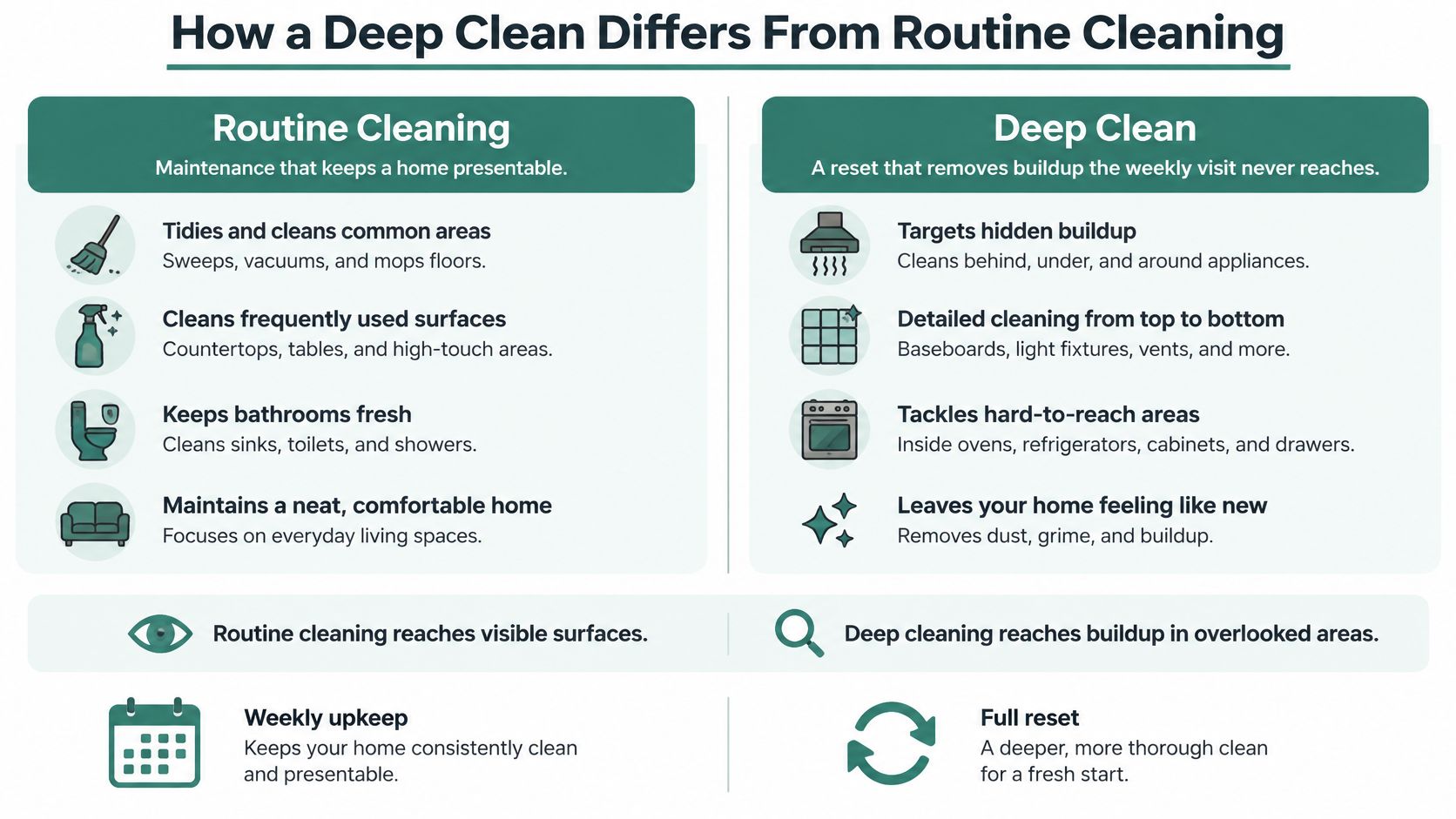
Routine cleaning is maintenance that keeps a home presentable; a deep clean is a reset that removes buildup ordinary upkeep may leave behind. The difference is detail and soil removal, not a stronger-smelling product.
| Area | Routine clean | Deep clean |
|---|---|---|
| Dusting | Visible surfaces and tabletops | Ceiling fans, vents, upper ledges, and trim |
| Floors | Vacuum and quick mop | Vacuumed edges and crevices, then damp mop after overhead dusting |
| Bathrooms | Maintenance wipe of sink and toilet | Scrubbed grout and fixtures, cleaning behind the toilet base |
| Kitchen | Counter wipe and dishes where agreed | Grease removal from stovetop, backsplash, and appliance exteriors |
| High-touch points | Maintenance wiping that should remain part of upkeep | Deliberate attention to switches, handles, faucets, phones, and keyboards |
| Typical frequency | Weekly or biweekly maintenance schedules | First visit, after a move, or when accumulated buildup warrants a reset |
Service names aren't standardized. A routine package may already include fan dusting or grout scrubbing, so compare task descriptions rather than package labels. What makes the deeper appointment useful is enough attention to remove established residue instead of maintaining an already-clean surface.
The sequence matters
Work from higher surfaces toward lower ones. Dust fans and ledges, clean furniture and frequently handled fixtures, then vacuum and mop last. Otherwise, debris from an overhead shelf can land on a floor that's already finished.
The Centers for Disease Control and Prevention's household cleaning guidance identifies handles, switches, faucets, phones, keyboards, and other frequently touched surfaces as areas needing routine attention. These shouldn't be reserved for an occasional deep clean just because they're small.
Consider a kitchen with tidy counters but a sticky backsplash and greasy cabinet fronts. A maintenance visit addresses current mess; a deeper appointment gives the cleaner time to loosen, lift, and wipe away that established film.
Seasonal resets and moves are useful opportunities to assess buildup, but there's no universal calendar that fits every household. Pets, cooking habits, occupancy, and the condition of the rooms all influence what needs attention.
A deep clean adds detail to routine upkeep. It doesn't replace the upkeep that keeps buildup from returning.
Cleaning, Sanitizing and Disinfecting Explained
Clean visibly dirty surfaces first, using soap, detergent, or an appropriate surface cleaner. Applying disinfectant over grease or grime isn't a substitute for removing that material.
These terms describe different tasks:
- Cleaning: Removes dirt, dust, grease, and residue, while reducing germs through removal.
- Sanitizing: Reduces germs to levels considered safe under applicable public-health requirements.
- Disinfecting: Uses an appropriate chemical product to kill remaining germs on a surface.
Contact time is part of the job
According to the CDC's cleaning and disinfecting guidance, disinfectants must remain on surfaces for their label-specified contact time; when instructions aren't available for a diluted bleach solution, the CDC advises keeping the surface visibly wet for at least 1 minute. That fallback isn't a universal contact time for every disinfectant.
A quick spray followed by an immediate dry wipe may therefore fail to complete the intended treatment. The cleaner needs the correct product, a compatible surface, and enough wet time.
Disinfection is a targeted extra step, particularly when someone is sick or medically vulnerable. It doesn't need to be applied indiscriminately to every wall, shelf, or furniture surface.
Safe products and clear instructions
Ventilate the room and use suitable gloves when handling cleaning chemicals. Never mix bleach or other disinfectants with different cleaners, because hazardous vapors can form. Don't assume that adding more product makes the task safer or more effective.
Food-contact surfaces deserve particular care. Check whether the product requires rinsing, and don't substitute a bathroom disinfectant for a product intended for kitchen use.
Before booking, request the names of products used for targeted disinfection and identify the surfaces involved. Mention delicate stone, specialty finishes, and product sensitivities so the work can be planned appropriately. Between appointments, use a manageable home-maintenance cleaning routine rather than repeatedly treating every surface with disinfectant.
Optional Add-Ons Most Providers Price Separately
| Add-on | Why it is often separate | Confirm before booking |
|---|---|---|
| Oven interior | Heavy baked-on grease and long soak time | Whether racks and door glass are included |
| Refrigerator interior | Shelves must be emptied and food moved | Whether food is removed and who moves it |
| Interior windows | Ladder access and streak-free glass work | Whether sills, tracks, and screens are included |
| Heavy appliance or furniture moving | Safety and floor-damage risks | Whether technicians move items and what they won't move |
| Light fixtures and lampshades | Fragility and high reach | Whether fixtures are removed or wiped in place |
| Mattress surfaces | Bulky handling and potentially surface-only work | Whether mattresses are included at all |
Appliance cleaning makes the exterior-versus-interior distinction especially clear.
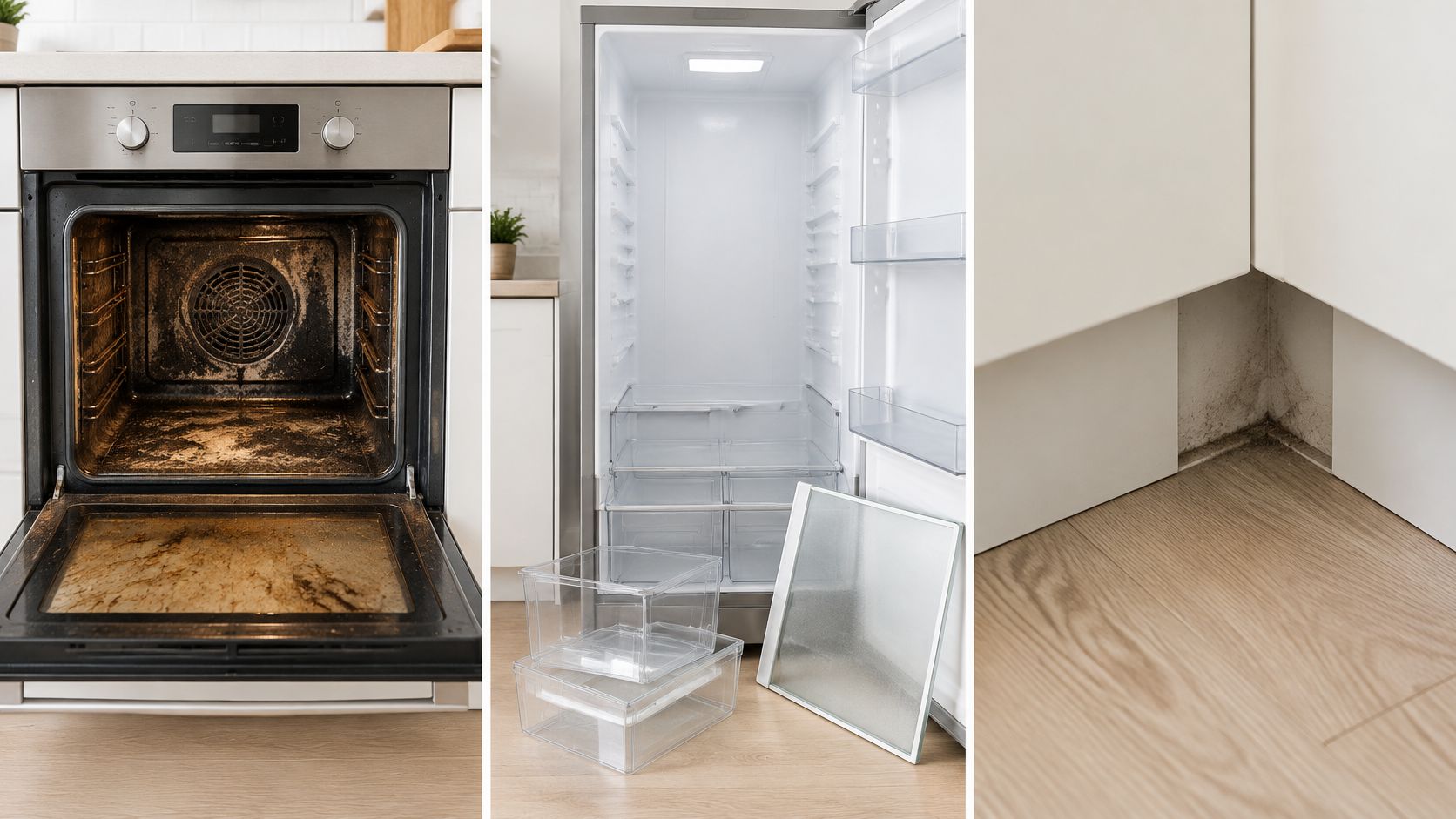
People reasonably associate deep cleaning with hidden spaces. In a 2024 Wakefield Research survey of 1,000 U.S. adults, 49% said spring cleaning included hard-to-reach places behind or underneath furniture and appliances, according to the American Cleaning Institute. That expectation still needs to become an explicit booking instruction.
Why access and handling change the scope
An oven interior needs time to soften deposits before wiping and rinsing. A refrigerator needs a food-handling plan, and removable shelves may need separate washing. Neither task is equivalent to wiping an appliance front.
Window work raises a different question: does “interior windows” mean glass only, or glass plus tracks, sills, and screens? Likewise, wiping an accessible light fixture in place is different from removing fragile components.
Use this video alongside your task list when discussing the work you want included.
Heavy furniture and appliances require a separate access decision. Don't assume cleaners will disconnect equipment, drag a refrigerator across the floor, or lift a mattress. Surface vacuuming also shouldn't be confused with stain treatment or extraction cleaning.
Review what affects deep-cleaning cost while building the task list, so the quote reflects the work you want.
Booking rule: If a task requires a ladder, equipment for moving items, dismantling, or substantial extra time, treat it as an add-on until it's confirmed in writing.
What a Deep Clean Does Not Guarantee
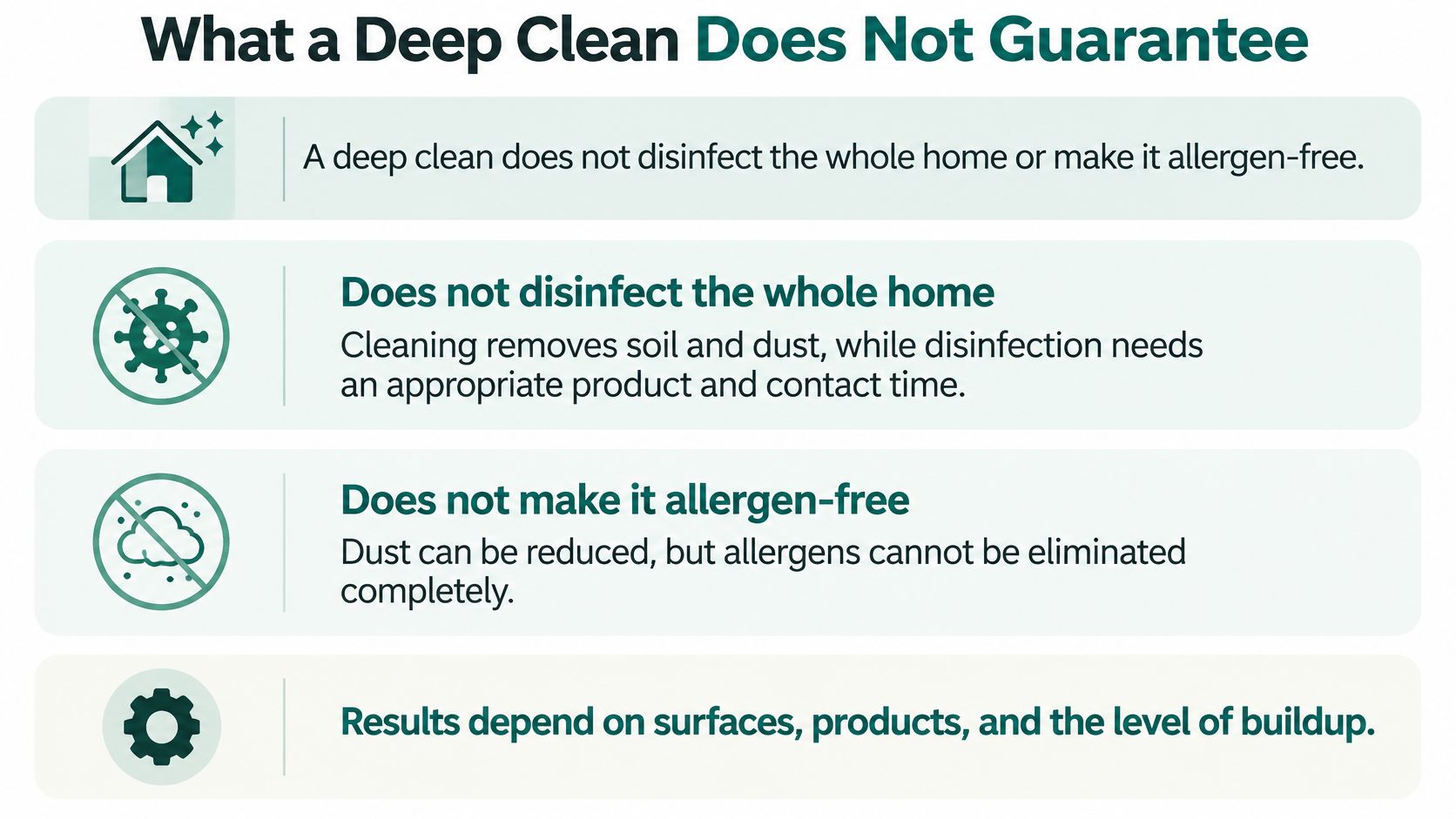
A deep clean does not disinfect the whole home or make it allergen-free. It removes accessible soil and dust. That is real progress, yet it differs from eliminating pathogens, preventing illness, or fixing an indoor-air-quality problem.
Contamination also depends on what happens after the cleaning visit. Everyday habits, such as washing hands when you come inside, limit the contaminants people carry in from outdoors. A cleaning appointment works best alongside those habits rather than as a substitute for them, and it should never be treated as medical protection.
Cleanliness isn't restoration or remediation
For a Milwaukee-area household, useful priorities include the kitchen sink and faucet, bathroom fixtures, and accessible register covers. HVAC filter inspection and replacement belong to the equipment's maintenance schedule, so treat that task as separate from room cleaning.
Other limits deserve equal clarity:
- Permanent damage: Etching, worn finishes, rust damage, and discolored sealant may remain visible after soil is removed.
- Hidden contamination: Ordinary surface work cannot reach inside a wall cavity or beneath fixed cabinetry.
- Product sensitivity: Fragrance-free or hypoallergenic options reduce exposure concerns without automatically disinfecting surfaces or guaranteeing that nobody will react.
- Specialist problems: Suspected hidden mold, persistent moisture, or damaged ventilation equipment needs assessment beyond a standard housekeeping visit.
A clean-smelling room proves little about disinfection. A properly cleaned room needs no strong fragrance to show the work was completed.
The home must be ready for safe work
For our visits, running hot water, functional electricity, and climate-controlled indoor temperatures are mandatory. These are working requirements, not optional conveniences. Without them, the team cannot heat water for scrubbing, run a HEPA vacuum, or work in safe conditions.
You do not need to be home during our deep cleaning. Arrange access in advance and leave clear instructions about restricted rooms, fragile belongings, and any surfaces that should not be treated. Clear instructions let the team work within an agreed scope without guessing about your priorities.
Confirm the Scope Before You Book
Request a written room-by-room scope before booking. Compare it with your home's actual condition, and make sure the quote distinguishes ordinary surface cleaning from detailed buildup removal.
Ask whether baseboards receive dusting or more intensive detailing, which fixtures are covered, and whether grout cleaning and appliance exteriors are included. Name specific trouble spots, such as grease along the range edge or residue behind the bathroom faucet, rather than requesting only a thorough clean.
Prepare the surfaces and access
Use a short preparation checklist:
- Clear work areas: Remove personal belongings from countertops and floors so the cleaner can reach the surfaces.
- Protect delicate items: Secure fragile decorations and identify loose fittings, damaged finishes, and specialty materials.
- Set movement boundaries: Record which lightweight items may be moved and which pieces must stay in place.
- Plan entry and departure: Provide access instructions and explain any locking or alarm procedure.
Our background-checked team secures the home when the work is complete. For other useful booking details, consult these questions to ask a house cleaner.
Match the booking to the condition of the home
At Carmen Family Cleaning, we recommend deep cleaning for first-time visits or homes that haven't been professionally cleaned in over 30 days. Our one-time deep cleaning starts at $355; the exact flat rate depends on square footage, bedroom and bathroom count, and selected add-ons. Oven interiors, refrigerator deep cleans, interior windows, and baseboard detailing can be added to the booking checklist.
Keep the agreed scope with your confirmation. After the visit, assess the listed surfaces and tasks rather than expecting every mark or maintenance issue to disappear. A clear scope gives both you and the cleaning team a practical definition of finished.
---
Carmen Family Cleaning offers Milwaukee-area households deep cleaning with optional appliance, window, and baseboard detailing. Visit Carmen Family Cleaning to build a booking checklist, review your flat-rate quote, and schedule the room-by-room work your home needs.