Monday's dishes get done. Tuesday's mail lands on the counter and stays there. By Thursday a mineral ring sits on the bathroom faucet, a gray path shows in the entryway tile, and a load of towels has been almost dry since Tuesday night.
That is seven days of small deposits, not a crisis. Household upkeep is close to universal. In 2025, 80.9% of people aged 15 and over took part in at least one household activity on an average day, according to the U.S. Bureau of Labor Statistics.
Effort is rarely the gap. Timing is. Housework piles into the weekend, then the same surfaces spend the weekdays collecting the next round.
This weekly cleaning list splits the house into eight stops in one fixed order. Dust falls, so dusting comes before the floors. Water travels, so bathrooms, the kitchen, and glass come last. Each stop gives the reason for its place, the mistake that undoes it, and a schedule a real household can keep.
1. Dusting Surfaces and Ceiling Fans
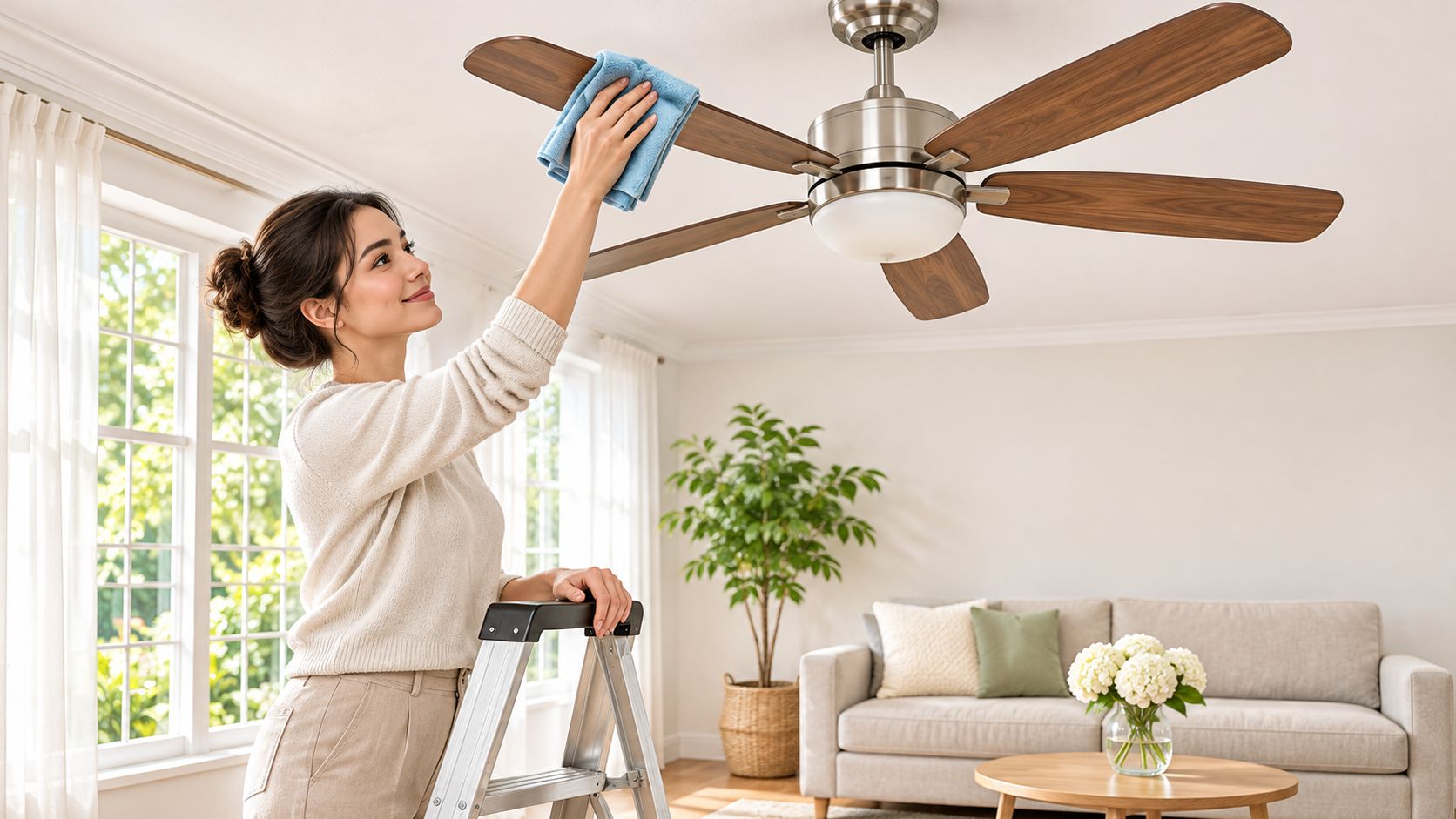
Dusting comes first because everything it loosens has to land somewhere, and the floor is already next on the list. Work from the ceiling down: fan blades and light fixtures, then shelves and picture frames, then furniture tops, then baseboards and sills. Dust after you vacuum and you've undone an hour of work in ten minutes.
The fan is the part people skip and the part that matters most. Blade tops collect a gray film even in homes that read as clean, and a fan left running all summer throws that film back into the room all day.
A stepladder and one damp microfiber cloth handle the whole job, starting at the highest point in the room.
The Mistake That Cancels the Work
Dry dusters. A feather duster or a dry cloth lifts particles into the air and sets most of them back down minutes later, often on a surface you already finished. A microfiber cloth wrung out until it's barely damp traps dust and holds it. Fold the cloth into quarters so you get eight clean faces before you rinse.
What's in the dust depends on the house. A 2025 Australian study found that extractor-fan use during cooking was consistently associated with lower concentrations of environmentally persistent free radicals in house dust, with ventilation, indoor combustion, season, construction type, and cleaning practices also mattering (the study is indexed in PubMed). Run the hood while you cook, and wipe damp so contaminated dust leaves the room rather than circulating.
A dry duster moves dust around the room. A damp cloth takes it out of the room.
Say a household has a dog that sheds. Dusting and vacuuming the same room back to back, rather than dusting the whole house and vacuuming an hour later, keeps fur from resettling on the shelves you just wiped.
- Wash microfiber separately, without fabric softener. Softener coats the fibers and turns a good cloth into a smeary one.
- Keep a caddy per floor. Cloths, a spray bottle, and a soft brush in one bin cut the trips that make people quit halfway.
- Use a pillowcase on bad fan blades. Slide it over each blade and pull it off, and the dust stays inside the bag instead of raining onto the bed.
2. Vacuuming and Mopping Floors
A family of four crosses the same entryway a hundred times a day, and every crossing tracks in grit. That grit is what dulls a hardwood finish and grinds into carpet pile, and it's why floors sit second on the list: dusting has just delivered the week's load to them.
Floor work is also where a weekly list pays for itself. A national survey of 1,000 U.S. adults by the American Cleaning Institute found households spend an average of about six hours a week cleaning, and 74% do light cleaning more often than deep cleaning. Weekly floor upkeep is the light kind, and it's the kind that keeps a deep clean from turning urgent.
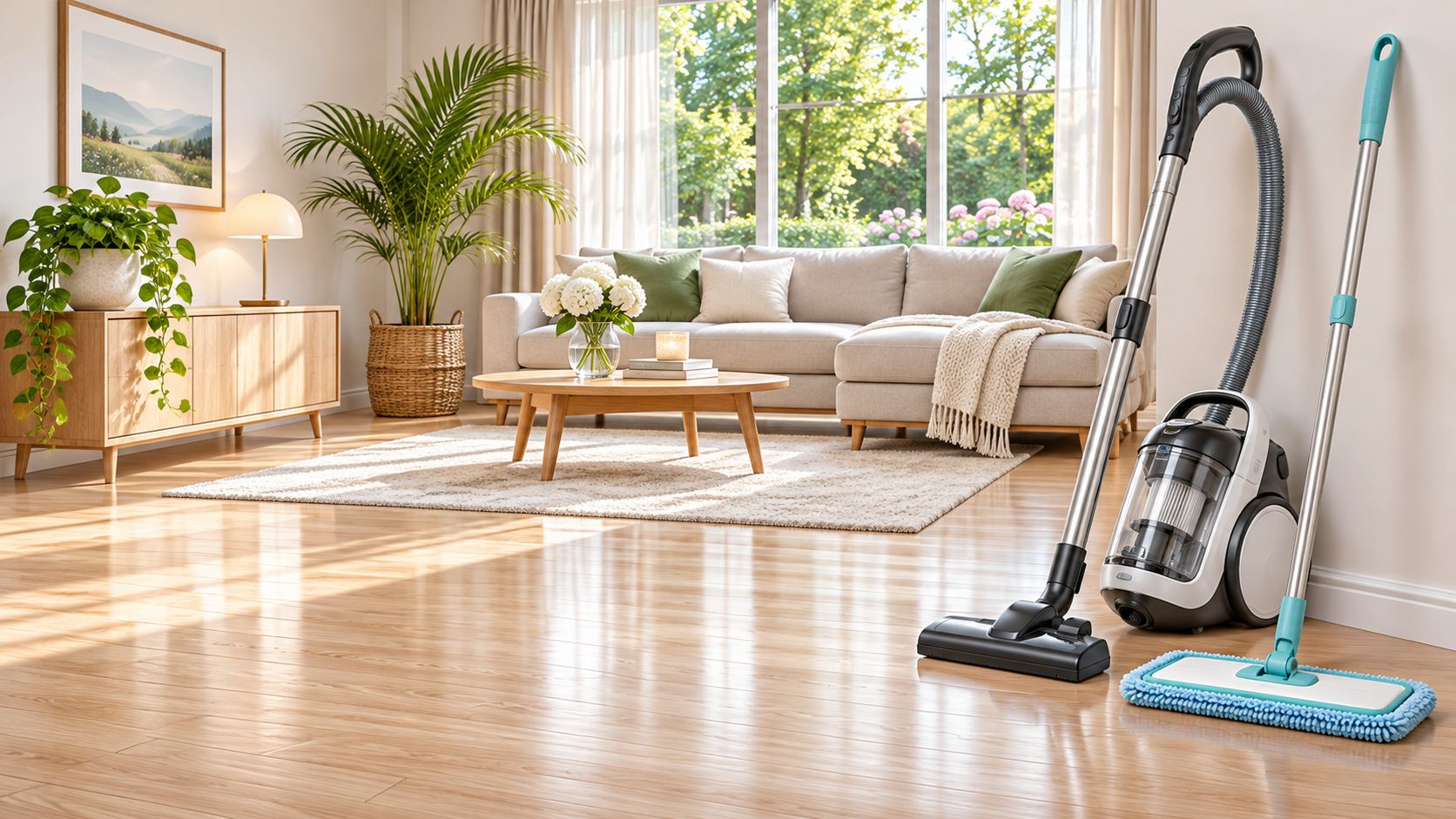
The kit for a floor day is short: a vacuum, a mop, and a clean pad per room.
Vacuum First, Mop Second, Without Exception
Vacuuming pulls loose grit out of pile and off hard floors. Mopping over grit doesn't remove it, it lifts it into a slurry and pushes it into the seams. Two vacuum passes, front to back and then side to side, pull more out of carpet in one session than a single slow pass.
Matching the mop to the floor matters as much as the cleaner in it. Sealed hardwood and laminate want a barely damp mop and a pH-neutral cleaner. Engineered vinyl tolerates more water but not standing puddles. Tile grout responds to a soft brush and a short dwell, not more liquid.
- Use a clean pad or head per room. Dirty water redistributes soil from the bathroom into the kitchen.
- Edge first, field second. Run the vacuum along baseboards, then overlap the middle passes, so you aren't trapping a line of grit against the wall.
- Never let cleaner dry on the floor. A film left to air dry grabs dust faster and makes next week harder.
If pet hair is what clogs the vacuum halfway through a room, the fix is technique rather than a bigger machine, and this guide to removing pet hair covers the passes that lift it out of carpet.
3. Bathroom Cleaning
The bathroom is the room where the order of work changes the result more than the product does. Start at the top with mirrors and fixtures, then the sink, then the tub and shower, then the toilet, and finish with the floor. Toilet first and the rest of the room means you're wiping the sink with whatever the scrubber left on your gloves.
The step almost everyone rushes is the one doing the disinfecting. San Francisco Environment's guidance on safer disinfecting defines dwell time as the period a product must stay visibly wet on a surface to reach the kill level specified on its label, and it treats efficacy and dwell time as a pair. Spray the toilet, the handles, and the floor around the base first, then do the mirror and sink while the product works, and come back to wipe.
Seeing the sequence once makes the timing obvious:
Never mix: bleach with an ammonia-based glass cleaner or an acidic descaler releases a gas you can't stay in the room with. Pick one disinfectant for the whole room and read its label before you combine it with anything.
Run the exhaust fan for the session and twenty minutes after, not only while the room feels steamy. A household dealing with fragrance sensitivity should keep a scent-free bathroom kit separate from the rest, because that's more reliable than guessing which label is telling the truth.
Hard water leaves a ring at the drain and a film on the tub that ordinary scrubbing won't lift. Cleaning stubborn bathtub stains walks through the poultice approach that pulls mineral and rust marks out instead of scrubbing them thinner.
4. Kitchen Cleaning and Countertop Sanitizing
Interior cleaning gets about 20 minutes a day, or 0.33 hours, for people aged 15 and over in 2025, according to the U.S. Bureau of Labor Statistics. Twenty minutes covers the dishes and a pass over the counters. It doesn't cover the sink rim, the backsplash behind the stove, or the appliance fronts, and that's the work the weekly kitchen block exists to do.
Work in grease order. Stovetop and backsplash first, because a degreaser needs a minute to work and you can wipe cabinet fronts while it sits. Then countertops. Then appliance exteriors. Then the sink and faucet. Then the trash can, and the floor last.
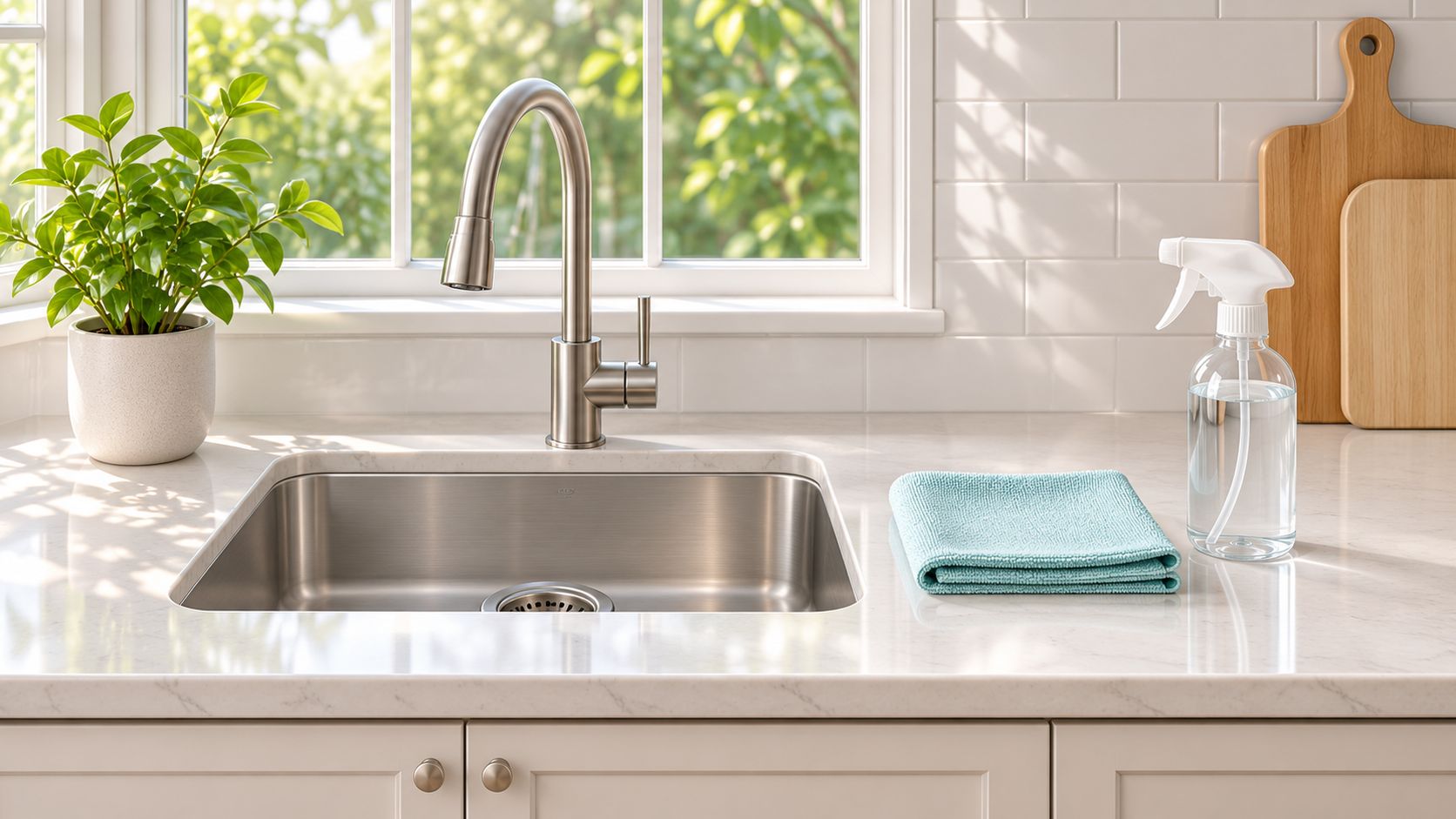
A wiped faucet and a dry sink are the last things you touch in the kitchen block, not the first.
Rinse the Degreaser Off
A degreaser left on a surface dries to a tacky film that grabs dust and shows every fingerprint. Give it its dwell time, work it with a non-scratch pad on the stovetop, then wipe with a clean damp cloth and dry the surface. The same rule applies to range hood filters, which are the single greasiest object in most kitchens and get forgotten for months.
- Match the cleaner to the counter. Sealed granite and quartz take mild dish soap and water. Marble, limestone, and travertine etch permanently with vinegar or citrus.
- Use two cloths, always. One for the sink and the trash rim, one for food-contact surfaces, and they don't swap.
- Do the sink after the counters. Working the other way moves whatever was in the drain back onto a clean countertop.
Say a household cooks every night. Counters and stovetop get wiped after each meal because it takes a minute, and the weekly block handles the sink basin, the appliance fronts, and the cabinet handles. Oven interiors and refrigerator deep cleans aren't weekly items at all. They belong on a longer rotation as add-on work.
5. Bedroom Cleaning and Linen Changing
Bedrooms get skipped because guests never see them, which is exactly why they need a fixed slot. Sheet changes drive the sequence: strip the bed first, start that load of laundry, and use the bare-mattress moment to dust and wipe the nightstands without fighting the bedding.
Strip, Wash, Dust, Remake
Fresh linen weekly, pillow protectors and mattress pad monthly, pillows and comforters quarterly. Washing sheets but never the protectors leaves the dust mites and skin cells one layer down, which defeats most of the point.
Dust from the top down (fan, headboard, nightstands) and do the floor last, after the bed is made. Dusting a nightstand after fresh sheets are on it drops the week's dust straight onto the pillowcase.
Fresh linen is the visible payoff, and the dusting happens while the bed is bare and you can reach everything.

- Hot water where the care label allows it. Warm is the compromise for delicate cottons, but a hot cycle is what knocks down dust mites.
- Two sets per bed. A spare set turns a sheet change into a ten-minute job instead of a laundry day.
- A basket in the room. Laundry that leaves the bedroom as a loose armful ends up in a chair instead of a machine.
The mistake that costs the most here is stuffing bedding into an already full drum. A comforter wrapped around a pillowcase never gets clean, and an overloaded spin leaves everything damp enough to smell musty before it hits the dryer.
Say a household has allergy sufferers. A weekly sheet change paired with a biweekly cleaning visit gives the bedding a reliable cycle without anyone having to remember which week it is.
6. Emptying Trash, Recycling, and Disinfecting High-Touch Surfaces
Which surfaces in a home need disinfecting every week? Fewer than most checklists suggest. CDC guidance on cleaning and disinfecting a home advises cleaning high-touch surfaces such as light switches, doorknobs, and countertops regularly and after visitors arrive, and states that routine disinfection at home is generally unnecessary unless someone is sick, has recently visited while sick, or a household member faces heightened health risks.
That distinction saves time and money. Cleaning removes soil with detergent and mechanical action. Disinfecting is a targeted follow-up for contamination-prone surfaces and sick-room conditions, and it only works if the surface is clean first.
Order within the task: empty the bins and replace the liners first, because a full bin is in the way and the smell travels. Then hit the touchpoints with a damp cloth and detergent. Doorknobs, light switches, stair rail, fridge and microwave handles, faucet handles, remotes, and the phone. Wash the bin itself every few weeks, since one leaky liner builds a residue smell that no amount of wiping the lid fixes.
Contact time is the product working. Wiping disinfectant off after five seconds is a cleaning step with extra cost, not a disinfection step.
The mistake to avoid is the single cloth tour of the house, where the same rag starts at the bathroom door and finishes at the kitchen drawer handle. Use one cloth for touchpoints and a separate one for grubby work, and wash both after.
Say a household has a new baby or is heading into cold and flu season. That's the week to add disinfection on top of cleaning, along with more frequent attention to handles and switches. Keeping the routine going the rest of the year is the harder part, and how to maintain a clean home covers the small daily habits that keep a weekly list from growing.
7. Glass and Mirror Cleaning
Clean glass after dusting and before moving on to laundry. That order keeps settled dust from sticking to freshly wiped panes, and leaves wet work out of the way before the floors are finished. Spray cleaner onto a cloth rather than the glass to prevent drips behind frames and down walls. Wipe horizontally on one side of a mirror and vertically on the other; the direction of a missed streak shows which pass needs another wipe.
Glass cleaner is one of the airborne products in a weekly kit, so ventilation matters when you use it. An observational study of two occupied homes found that professional cleaning raised concentrations of measured volatile and semivolatile organic compounds (the study is published in PMC). The authors note that the health implications are difficult to quantify. Spray onto the cloth, open a window, and skip fragrance where possible.
Circular buffing can spread cleaner into a film, while paper towels may leave lint along frame edges. Use a clean, dry microfiber cloth for the final pass.
- Use different wipe directions. Wipe the inside horizontally and the outside vertically so you can identify which side has a streak.
- Avoid ammonia on film. Tinted windows and some mirror coatings can cloud.
- Squeegee shower glass after use. This limits water marks and reduces the scrubbing needed during the weekly clean.
For example, if Saturday is the main cleaning day, finish mirrors and windows after dusting and before turning to laundry. For baked-on oven-door haze, use the method in this guide to cleaning oven glass inside and out.
8. Laundry Washing, Folding, and Putting Away
By Thursday the laundry has a shape: a chair, a basket, a corner of the couch. Laundry sits last on the list for a practical reason. It's the only task here that runs on its own clock. Start the first load before you pick up a duster and the last load is ready to fold while the mopped floor dries.
Sort Once, at the Machine
Three bins at the washer (whites and lights, darks, towels and bedding) cost less time than sorting a mountain on Sunday night. Overloading the drum is the mistake that undoes a wash. Clothes need room to move for detergent to rinse out, and a packed machine leaves both soil and lint behind.
- Dry towels completely. A towel pulled out damp at the corners develops a musty smell that survives a re-wash.
- Clean the washer monthly. Detergent residue and lint build a film that transfers onto the next load.
- Fold where the clothes live. A basket that travels to the bedroom gets emptied. One parked in the living room becomes furniture.
- Run bedding alone. A comforter wrapped around a jeans leg doesn't get clean, and it throws the drum off balance.
Fold it in the room where it lives. The distance between the dryer and the drawer is where most laundry goes to die.
Say a household has three children. A weekly laundry day with a sorted basket per person means everyone knows where their clothes go, and the folding gets done by whoever owns the pile.
How the eight weekly cleaning tasks compare at a glance
| Item | Where It Applies | Key Caution | Common Tools |
|---|---|---|---|
| Dusting Surfaces and Ceiling Fans | Shelves, furniture, baseboards, fixtures, vents, and fan blades | Dry dusting can spread particles; take care with hard-to-reach areas | Microfiber cloths, damp cloths, dusting caddy |
| Vacuuming and Mopping Floors | Carpets, rugs, and hard floors such as tile, vinyl, laminate, and sealed hardwood | Excess water or unsuitable cleaners can damage flooring | Vacuum, floor-safe cleaner, damp mop, microfiber mop heads |
| Bathroom Cleaning | Toilets, sinks, faucets, tubs, showers, mirrors, and countertops | Never mix bleach with ammonia or acidic cleaners; ventilate the room | Bathroom cleaner, disinfectant, toilet brush, sponges, cloths |
| Kitchen Cleaning and Countertop Sanitizing | Countertops, sinks, stovetops, backsplashes, appliances, and cabinet fronts | Check surface compatibility, especially for natural stone | Degreaser, surface-appropriate cleaner, microfiber cloths |
| Bedroom Cleaning and Linen Changing | Bedding, bedroom furniture, floors, and door handles | Follow fabric care labels when washing linens | Clean sheets, laundry basket, cloths, vacuum or broom |
| Emptying Trash, Recycling, and Disinfecting High-Touch Surfaces | Household bins, doorknobs, switches, faucets, railings, and remotes | Clean surfaces first and follow disinfectant contact time | Bin liners, household disinfectant, separate cleaning cloths |
| Glass and Mirror Cleaning | Mirrors, shower doors, glass doors, and interior windows | Dirty cloths cause streaks; avoid ammonia on tinted or coated glass | Glass cleaner or water and vinegar, lint-free microfiber cloths |
| Laundry Washing, Folding, and Putting Away | Clothing, towels, bath mats, and household linens | Follow care instructions; avoid overloading machines or using excess detergent | Washer, dryer, detergent, sorted laundry baskets |
Turn the Weekly Cleaning List Into a Routine That Holds
A list only holds when it fits the week you have. Start with the two or three tasks that cause the most friction, assign each one a fixed day, and let the rest arrive as the routine settles. Bathrooms on Tuesday and floors on Thursday will do more for a house than a perfect seven-day plan abandoned in week three.
The order matters more than the calendar. Dust falls, so dusting precedes vacuuming. Water travels, so wet work comes last and gets a drying window. Once that sequence becomes habit, moving tasks between days costs nothing, because each one still supports the next.
Expect two failure modes. First, the week that collapses. When illness or a work deadline takes out three days, do the two tasks that create the biggest visible change, bathrooms and floors, and skip the rest without trying to catch up. A skipped week gets handled next week. A doubled-up week is what makes people quit. Second, the list that grows until it's unusable. Oven interiors, refrigerator detailing, baseboards, carpets, and interior windows aren't weekly work, and putting them on a weekly list turns a routine into something you dread.
Give the routine three weeks before you judge it. The first passes are slow because you're still learning where things live and which cloth goes where. By the third week the bathroom takes half the time, and the fan blades stop being a discovery.
Keep the eight tasks in the same order, and the sequence itself begins the planning for you. Dust, floors, bathroom, kitchen, bedroom, touchpoints, glass, laundry. Anyone in the household can pick up the list mid-week and know what comes next, which is the true test of a system that's meant to hold.
If the list still outpaces your week, the sensible division is to hand off the heavy items (floors, bathrooms, kitchen, and dusting) to a recurring visit and keep the daily five-minute jobs yourself. Weekly recurring cleaning starts at $117 per visit, and a $355 deep clean is the recommended starting point for a home that hasn't had professional cleaning in more than 30 days.
---
Carmen Family Cleaning has served Milwaukee and the surrounding communities since 2016, with weekly, biweekly, and every-four-week schedules built around the tasks in this list, plus one-time deep, move-in and move-out, and post-construction cleans when a home needs a reset first. Every quote is flat-rate and confirmed before booking, so you know the price before anyone picks up a cloth. Visit Carmen Family Cleaning to check available appointment dates and set the schedule that fits your week.