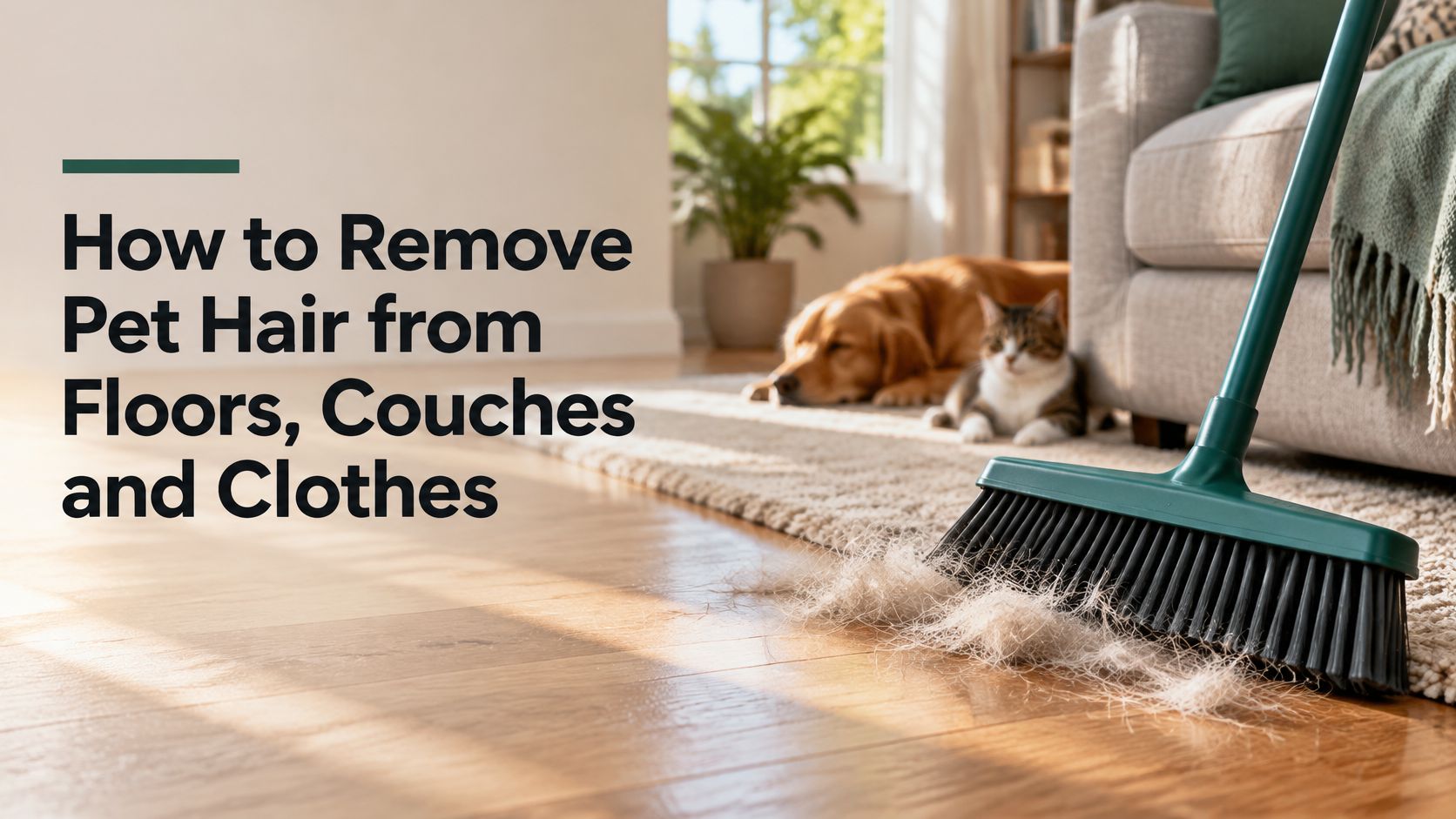
You sit down on the sofa after work and your dark pants come up striped with fur. The rug by the food bowl looks freshly vacuumed until the lamp is on, and then every strand shows. A coat by the door picks up another layer before you leave. That is the usual starting point for figuring out how to remove pet hair, and the fix is not one gadget. Carpet, hard floors, fabric, and clothes each hold fur differently, and the washer, dryer, and filters keep what the room cleanup misses.
Tools and Methods for Each Surface
No single tool clears every surface. Hair lies flat in carpet pile, floats off a dry broom on hard floors, hooks into upholstery weave, and sticks to dry clothes with static. Match the tool to the surface, or you will push fur around instead of collecting it.
| Surface | Best Tool | Method | Watch For |
|---|---|---|---|
| Carpet | Rubber squeegee or dry rubber glove, then vacuum with agitation brush | Loosen hair first, then vacuum in overlapping passes | Brush roll wrapped with hair loses pickup power |
| Hard floors | Damp rubber broom or microfiber mop | Sweep hair into a pile, then damp-mop | Dry sweeping spreads hair into the air |
| Sofa and upholstered chairs | Rubber glove, upholstery tool and crevice tool | Brush against the grain, vacuum, then check seams and under cushions | Suction alone misses hair caught in fabric |
| Clothing | Adhesive lint roller or damp rubber glove | Use the roller as a final pass after the item is dry | Roller sheets fill quickly; replace them often |
| Mattress | Upholstery tool on a HEPA-filter vacuum | Vacuum the surface, seams and edges, then rotate the mattress | Often skipped, even though many pet owners share their bed |
What the numbers do and don't mean
In 2024, a tested vacuum cleaner removed 99.0% of pet hair in Modern Castle's pet-hair performance test. That result belongs to one machine in one test. It is not a promise that every vacuum will do the same on a matted rug or a velvet chair.
Start on the surface that shows the most hair, usually the sofa or the carpet nearest the pet's resting spot. Work that area fully before you chase stray strands across the rest of the room. Bedding waits for the laundry steps later, because a quick vacuum of a blanket only moves fur into the washer. A room-by-room pass sits more naturally on a house cleaning checklist than on a single gadget.
How to Remove Pet Hair Step by Step
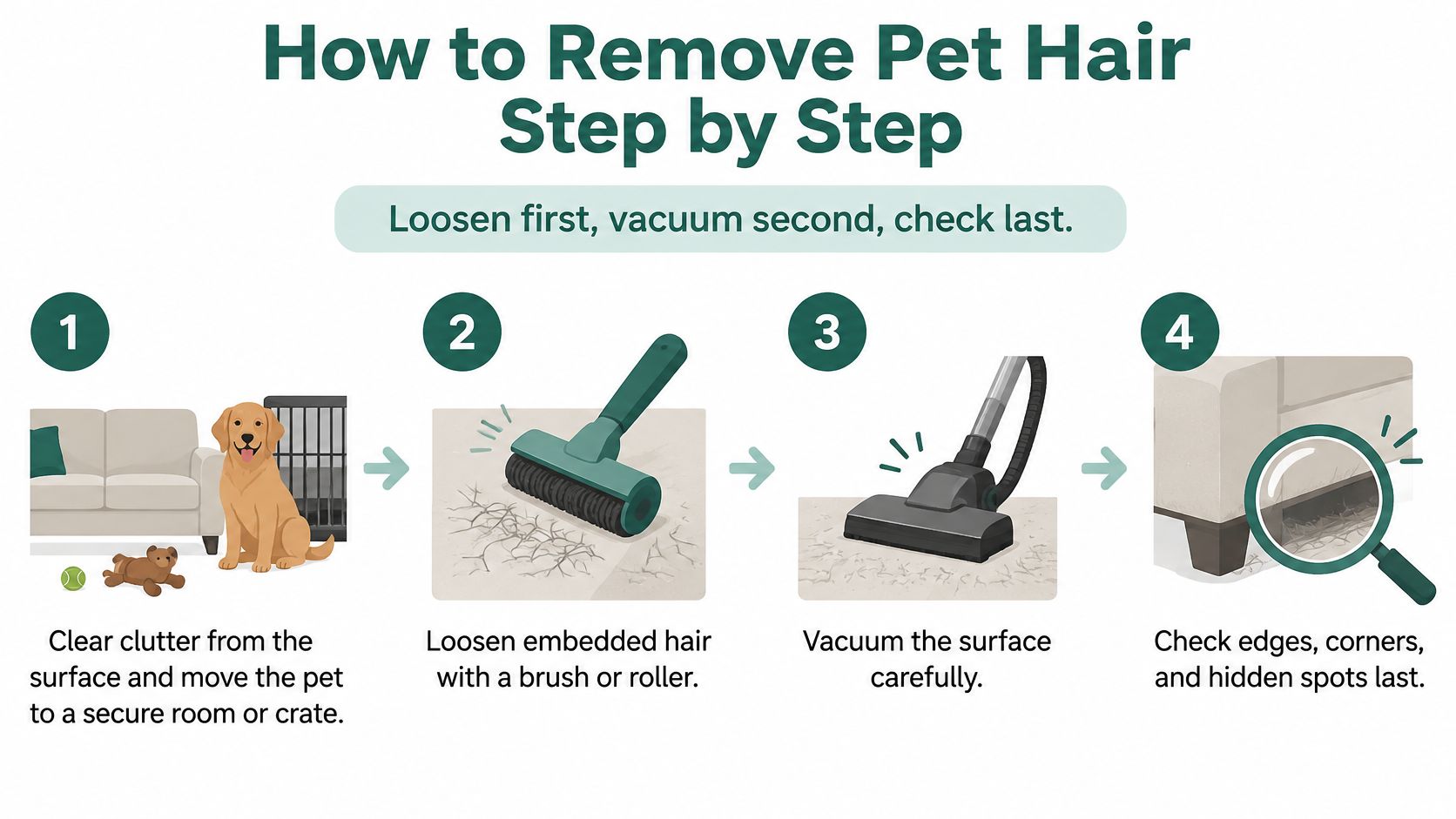
Order beats speed. Loosen first, vacuum second, check last. Suction on flattened fibers skims the top and leaves the mat underneath. A fast pass looks busy and still fails the light test.
Consumer Reports shows why several passes matter. Technicians scatter, stomp, and compress 5 grams of long Maine Coon fur into medium-pile carpet before they score pickup, and top-rated machines collect all of that test fur in the bin or bag. Real rooms are messier than a lab carpet, so the same patience applies.
The six passes
1. Clear clutter off the surface and move the pet into a secure room or crate. Loose toys and a pet underfoot break every pass, and you end up vacuuming the same square twice.
2. Loosen embedded hair with a rubber-bristle brush, a squeegee, or a dry rubber glove, working against the nap. Fur lifts out of the fibers instead of staying pressed flat, which is the slip people make when they rely on suction alone.
3. Vacuum slowly in overlapping passes, first with the grain and then across it. A quick swipe only skims the surface. An agitation brush or pet-hair tool needs time on each strip.
4. Check the surface under angled light and repeat cross-grain passes until no visible strands remain. Direct overhead light hides what a low lamp shows.
5. Finish seams, edges, and the space under cushions with a crevice tool. Treat rugs and upholstery before bare floors so loosened hair can be picked up on the last floor pass.
6. Pull wrapped hair off the brush roll, then empty the bin outdoors when you can. Wrapped hair cuts agitation and can lay fur back on the carpet. Dumping indoors sends fine dust back into the room.
A surface that looks clean in direct light but still shows strands under angled light is not finished.
Hair can carry dander, so a sealed vacuum with HEPA-level filtration is the better machine when you have one. The U.S. HEPA benchmark is at least 99.97% filtration of 0.3-micron particles. Filtration contains fine dust. It does not replace the physical work of lifting hair out of fabric.
Clearing Pet Hair From Clothing and Bedding
Shaking a blanket and running the dryer pulls off some fur. Heavy coats still ride into the washer, pack the dryer lint screen, and sit in the drain path. That is where pet hair persists after the room looks fine.
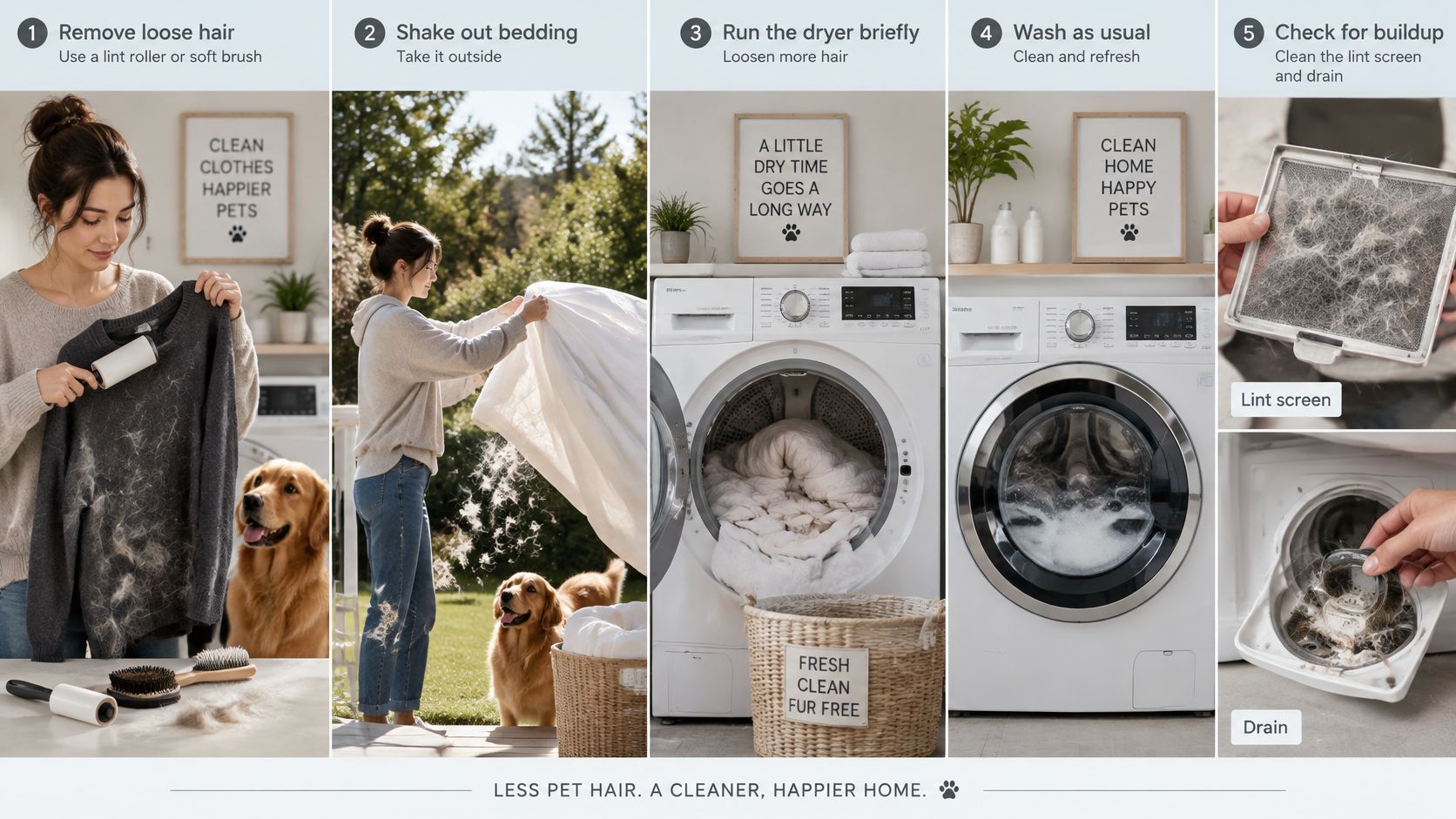
Keep fur out of the machine
1. Brush or roll loose fur outdoors, or over a disposable sheet, before the item goes into the washer.
2. Strip heavily covered blankets, pet beds, and sofa covers with a rubber glove first, then shake them outside. A glove pulls more than a quick shake.
3. Wash pet bedding on a normal cycle and don't overload the drum. A stuffed load traps fur against the drum and the filter instead of flushing it through.
4. Clean the dryer lint screen before the load and again after it. Fur builds a mat that cuts airflow even when the screen looked clear yesterday.
5. Check any accessible washer filter or lint trap, and follow the appliance maker's instructions for cleaning it. Dog hair can block some filters that were meant to catch finer lint.
Fur left in the drum can clog drains and filters. Keeping it out of the wash protects the machine and the plumbing. Capturing fur this way is not the same job as stopping every tiny fiber that laundry sheds into wastewater. It is the practical step that keeps a filter from packing solid.
The short video below walks through a hands-on pass on fabric, which pairs with the glove-and-roller work before anything hits the washer.
Wash pet bedding apart from clothing. Roll coats and work clothes once they are dry, and replace the sheet as soon as it stops grabbing. Treat anything the pet sleeps on as a high-hair textile and wash it every one to two weeks. A dryer sheet on a clean item can pick up a last film of fur, but it won't fix a packed lint screen.
Why Removing Visible Hair Is Not Allergen Control
A room can look spotless and still bother someone with allergies. Visible hair is only part of what pets leave behind. Dander and proteins such as cat Fel d 1 are microscopic, and they cling to carpets, bedding, and upholstery long after the fur is gone.
A controlled study published in 1994 followed 52 families with allergic children and tested central vacuums, older vacuums, HEPA-filter vacuums, microfilter vacuums, and carpet treatments on carpets, upholstered furniture, and mattresses. As PubMed records of that study show, central, HEPA, and microfilter vacuums did not reduce measured cat allergen Fel d 1 or dog allergen Can f 1 in house dust. A tannic-acid treatment cut cat allergen by 30% and dog allergen by 10%, and that benefit lasted only about one week. Levels returned to baseline after 21–35 days. The same researchers recorded allergen increases of 10–30 times in homes visited by cats or cat owners.
What that means in a real room
Hair pickup and allergen reduction are different jobs, and they need different expectations. A vacuum that fills a bin with fur has not emptied the reservoir in the carpet pad or the sofa cushion.
- Move the pet out of the room before you start, so fresh dander isn't falling onto a surface you just cleared.
- Clean from high surfaces to low, then vacuum upholstery and floors with a sealed or HEPA-filter machine.
- Launder washable textiles on a normal cycle once loose fur is off them.
- Keep ventilation or a room air filter running while you work and for a while after.
Brush or groom pets outdoors, or in a room without sensitive occupants. Indoor brushing can lift allergen into the air even when the floor looks cleaner afterward.
I would not tell anyone that a vacuum makes a home allergen-free. Pair this routine with your doctor's advice. If the reservoirs in carpet and upholstery are already heavy, a deep cleaning visit is a reasonable next step alongside the weekly hair work, not a substitute for it. Repeat the routine, because both hair and allergen-carrying dust settle again after you finish.
A Weekly and Monthly Routine That Keeps Hair Away
Hair comes back within days of a thorough clean. The schedule matters more than any one trick. Daily work hits the spots that fill fastest. Weekly work covers traffic paths. Monthly work reaches the places people skip until fur is packed in.
| Frequency | Area | Task | Reason |
|---|---|---|---|
| Daily | Pet bed and resting spots | Shake out or quick vacuum | Dense hair builds up fastest here |
| Weekly | High-traffic floors and pet zones | Slow vacuum, then damp-mop hard floors | Hair and dander settle again within days |
| Weekly | Pet's favourite sofa or chair | Rubber tool loosening, then crevice vacuum | Fabric holds hair tightly if left |
| Every 1-2 weeks | Pet bedding and removable covers | Outdoor shake, then wash | Fur transfers into the dryer and drain |
| Monthly | Mattress surface, seams and under furniture | Upholstery tool on HEPA vacuum, then rotate mattress | Often skipped, so hair and dander accumulate |
| Monthly | Vacuum filter, brush roll and dryer lint screen | Clean and replace filters on schedule | Clogged parts reduce pickup and airflow |
A Dyson pet-dander guide notes that 71% of surveyed pet owners reportedly do not vacuum the mattress, even though one in two shares a bed with a pet. That monthly row is the one most homes drop. Under the bed and along the box spring collect the same drift.
Two habits that save the monthly job
Keep a rubber tool beside the sofa and run it the moment you see a mat, so weekly vacuuming isn't fighting a week of pressed-in fur. Replace vacuum filters on the maker's schedule, not when the machine starts to smell. A clogged filter and a wrapped brush roll both cut airflow before the bin looks full.
If weeknights are already full, fold these rows into a cleaning schedule for working moms so the mattress and the filters don't wait for a free Saturday that never comes. Increase the weekly pass when shedding season, asthma in the house, or more than one pet makes fur pile up faster than seven days.
Decide Whether to Clean Yourself or Hire Help
A home routine is enough when the hair is still loose, you have one pet, and the surfaces are ones you can reach with a glove and a vacuum. Hire help when the same full routine no longer lifts the mat.
Book a pro if any of these fit:
- Upholstery or carpet stays matted after loosening, slow vacuuming, and a second angled-light check.
- Several pets shed into the same rooms, so weekly DIY never catches up.
- Someone in the house has allergies, and dust reservoirs in carpet and bedding need more than a quick pass.
- You are moving in or out, and the place has to be cleared before keys change hands.
Tell us the hair level, the number of pets, and any allergy concerns when you book, so the quote matches the job. Homes with heavy buildup, extensive pet hair, or biohazards that weren't disclosed at booking may need extra labor time and an adjusted flat rate, and we confirm that with you first. Pets must be secured in a comfortable room or crate during cleaning, so plan that crate or closed room before we arrive. General clutter such as clothing and toys should be picked up too, or we spend the visit moving things instead of lifting fur.
Before you book, write down the hair level, the pet count, and any allergy notes, and share them up front. A short list of questions to ask a house cleaner keeps that conversation specific.
---
Carmen Family Cleaning handles pet-hair buildup on floors, upholstery, and sleeping areas for Milwaukee-area homes, with HEPA vacuums and pet-safe supplies brought to the visit. If your own routine isn't keeping up with shedding, recurring visits or a one-time deep clean can reset the rooms your pet uses most. Visit Carmen Family Cleaning to book a time and tell us how many pets share the house.