It's 8 p.m., the sink's full, laundry's on the chair, and the bathroom mirror tells you the weekend clean didn't survive Monday. You don't need a sterile house or a shelf of scented sprays. You need a clean enough standard you can repeat on tired days, with short daily resets, a steady weekly block, and targeted work for the spots that affect health, food safety, and air quality.
Daily, Weekly and Monthly Cleaning Schedule
Start with this schedule tomorrow. It's built for a three-bedroom home, so scale the times down for an apartment or split the weekly block across two days for a larger house.
| Frequency | Tasks | Time needed |
|---|---|---|
| Daily | Wash or load dishes, wipe counters and sink, clear surface clutter, wipe doorknobs and light switches | 15-20 minutes |
| Twice weekly | Clean bathroom sinks and toilets, mop kitchen floor, take out trash and recycling | 30-40 minutes |
| Weekly | Vacuum carpets and rugs, dust baseboards and ledges, clean showers and tubs, change bedding every 1-2 weeks | 90-120 minutes |
| Monthly | Clean inside the microwave, wipe fridge shelves and door seals, clean oven exterior and range hood filter, dust vents | 60-90 minutes |
| Quarterly | Clean oven interior, wash washing machine drum and dishwasher filter, clean windows and blinds, vacuum upholstery | 2-4 hours |
How to read the bands
Daily work is a reset, not a deep clean. You're removing food residue, standing water, and clutter so tomorrow starts neutral. Twice-weekly work stops bathrooms and kitchen floors from becoming weekend projects.
Weekly work is where you remove the dust and soil that daily wiping misses. Vacuum after dusting, scrub showers before soap film hardens, and rotate bedding on a fixed day so you don't rely on memory.
If daily and weekly tasks aren't steady yet, don't add monthly work to compensate. A smaller routine you keep beats a complete chart you abandon by Thursday.
That distinction matches how many people already clean. The American Cleaning Institute's 2018 National Cleaning Survey found that 74% of respondents described their usual cleaning as light, while only 26% described it as deep cleaning. Use that reality instead of fighting it. Light, frequent work carries the home, and periodic work handles appliances, windows, and areas behind furniture.
What to add first
Run daily tasks for a week, then lock in the weekly block. Add monthly tasks only after those two bands feel automatic. If you can't protect a weekly block, that's the point where weekly recurring cleaning help makes practical sense, because skipped vacuuming and bathroom work compound faster than skipped window cleaning.
Seasonal effort still has a place, but it supplements the routine. It doesn't replace it. Dirt arrives every day through shoes, cooking, pets, and hands, so learning how to maintain a clean home is mostly about matching each task to the speed at which it gets dirty again.
How to Set Up Your Routine in One Evening
You can build the whole system in one evening if you resist the urge to deep clean while you're planning. Walk, sort, assign, stock, and test.
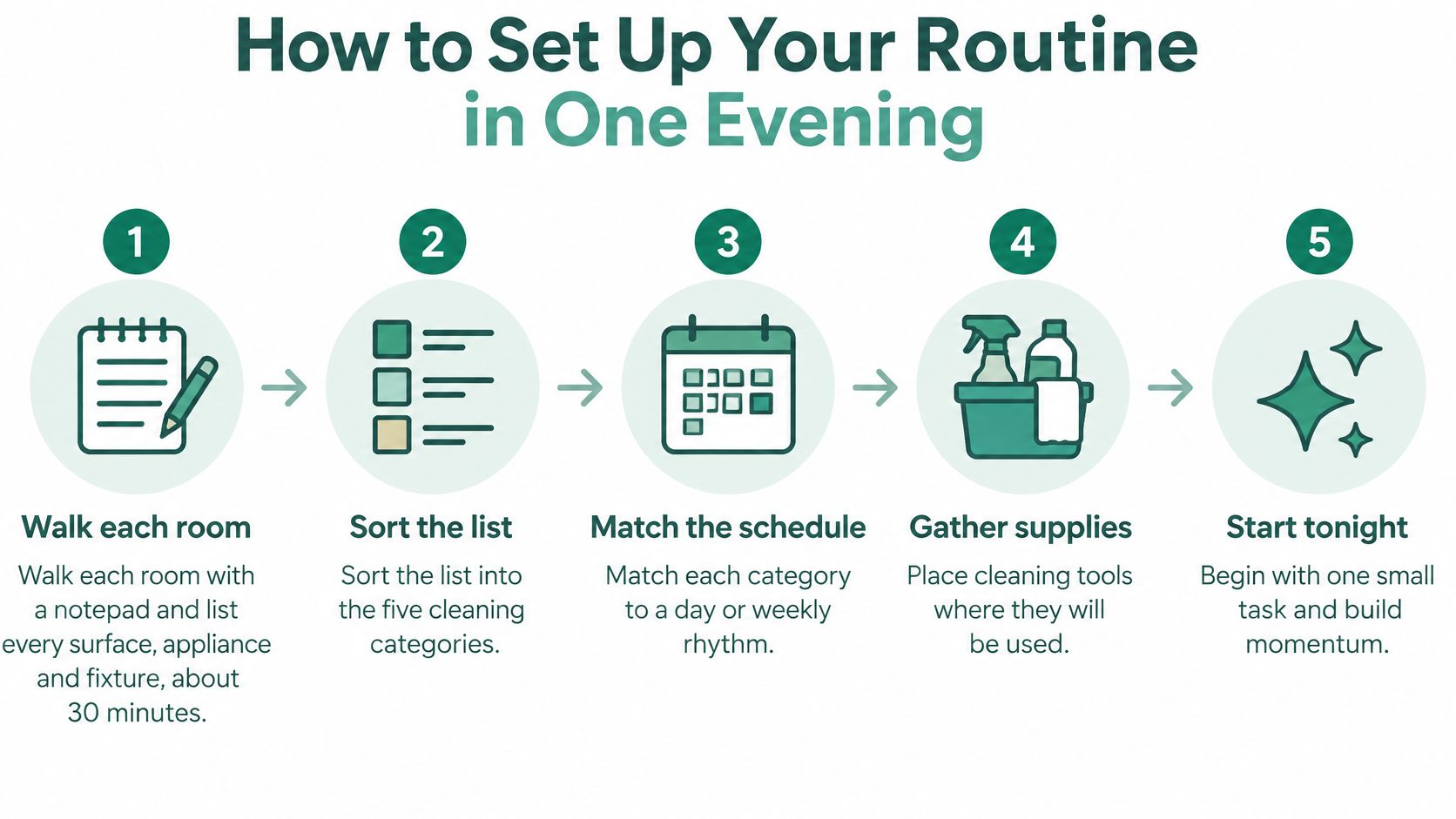
1. Walk each room with a notepad. List every surface, appliance, and fixture, which takes about 30 minutes in most homes. You're looking for what exists, not judging how dirty it is. Open the fridge, look behind the toilet, and check under sinks.
2. Sort the list into the five cadences. Put dishes, counters, and clutter under daily, bathrooms and trash under twice weekly, and so on. Anything with heavy buildup goes on a separate one-time catch-up list, not into week one.
3. Assign each task a day. Pair bathroom work with a day someone's home long enough to finish it, and put vacuuming when the house is awake and shoes are off. Specific days beat intentions like "sometime this week."
4. Stock one caddy per floor if you can. Include a multi-surface cleaner, microfiber cloths, a scrub brush, a small bucket, and trash bags. Tasks stall when the right cloth is downstairs and you're already upstairs in socks.
5. Put the weekly list where everyone sees it. Use the fridge, a shared phone reminder, or both. A list buried in one person's notes app becomes one person's job.
6. Run the first full week, then adjust. Move any task that slipped to a lighter day instead of doubling up the next day. You're testing fit, not proving discipline.
The week one check
The common failure is writing too many tasks into week one. By midweek the list feels punitive, so people quit the whole system instead of trimming it.
End of week one rule: Don't add anything new until every daily task is done at least five days out of seven.
If you hit that mark, the routine has a foundation. If you don't, shrink the daily reset to dishes, counters, sink, and a five-minute clutter sweep, then rebuild from there.
Forgotten Spots That Build Up Unnoticed
The most telling blind spot isn't the living room floor. It's the oven nobody can date. The American Cleaning Institute's 2019 National Cleaning Survey found that 47% of household heads could not remember the last time they cleaned their ovens, and 41% could not remember the last time they cleaned their refrigerators. That's not laziness. It's a tracking failure.
Group the risks by type
- Food-contact areas: Fridge door shelves, the microwave ceiling, the trash can lid, and reusable grocery bag bottoms. These hold spills and raw food residue you won't see from across the room.
- Moisture-prone spots: The washing machine gasket, dishwasher filter, shower grout, and grout behind the toilet. Warm moisture plus residue is where odors start.
- Hidden areas: Behind the sofa, vent covers, tops of door frames, and the strip behind the stove. These collect dust and grease for months.
Give special attention to glass you heat and reheat, including cleaning oven glass inside the door, because baked-on film gets harder every cycle.
Track dates, not intentions
Keep a simple last-cleaned log on the fridge. Write the item, the date, and the next due date. Set a phone reminder when an item passes its interval.
Once a month, do a ten-minute walkthrough with the log in hand. Check the trash lid, pull the dishwasher filter, look at vent covers, and run a finger along a door frame. You're auditing, not scrubbing everything you find.
A missed spot is usually a tracking problem rather than an effort problem. The log matters more than scrubbing harder, because it tells you what your eyes stopped noticing months ago.
How to Disinfect Without Overdoing It
Cleaning alone removes most household germs. I would save disinfectant for high-touch surfaces during illness, after a sick visitor, or when someone in the home is medically vulnerable. Disinfecting every surface every day adds chemical exposure without making an ordinary home meaningfully safer.
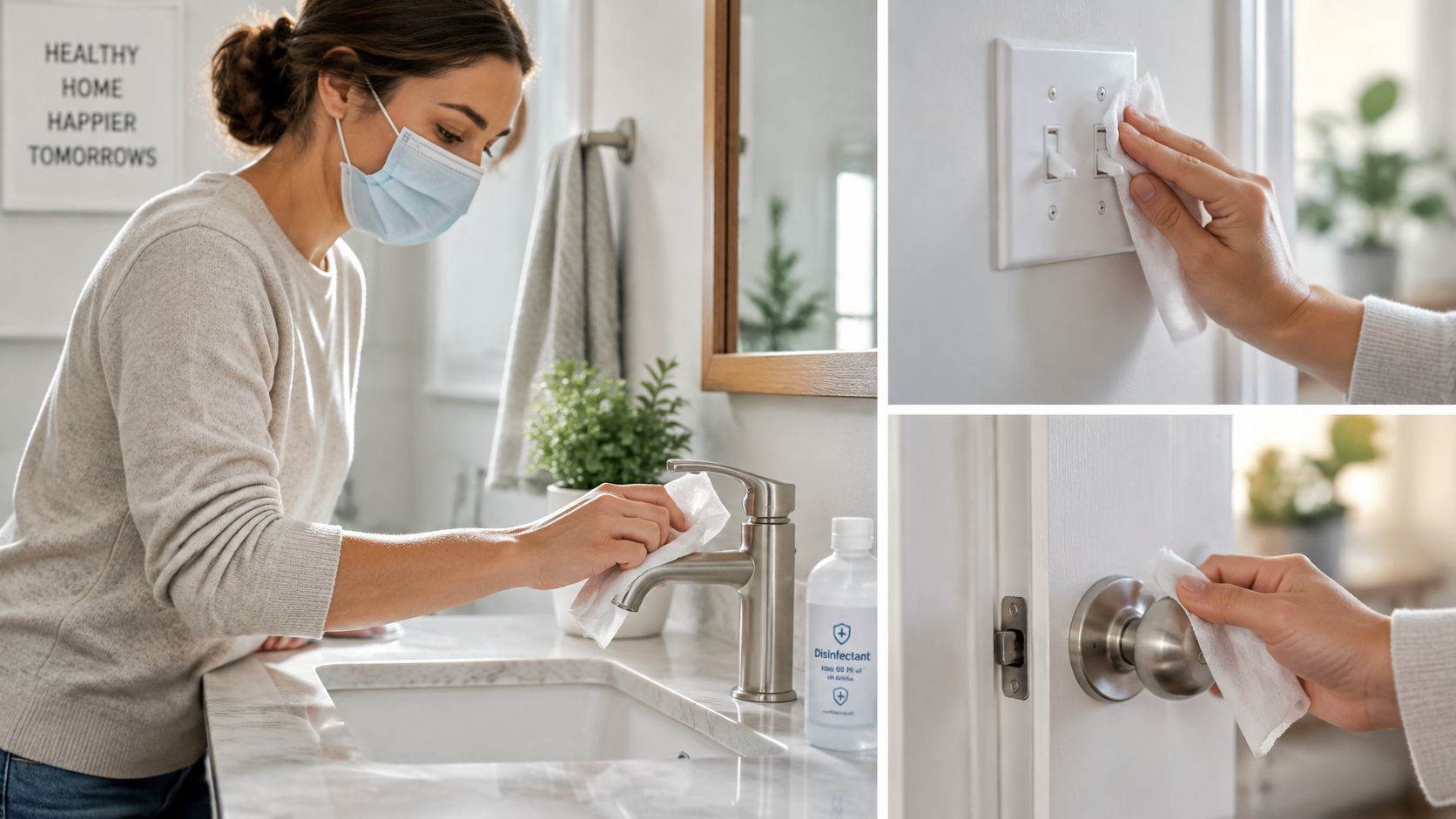
The photo below shows the right targets, the places hands hit all day.
Use the two-stage method
1. Remove visible soil first. Wash with soap or detergent and water. Disinfectant can't work well through grease, crumbs, or toothpaste film.
2. Rinse or wipe away residue. Leave the surface clean so the next product contacts the surface, not the dirt.
3. Apply an EPA-registered disinfectant suited to the material. Use enough to keep the surface visibly wet, and check that it's safe for stone, wood, or electronics before you spray.
4. Keep it wet for the label contact time. This is often several minutes, not a quick wipe. Set a timer if you tend to rush.
5. Ventilate and let it air dry. Open windows or run a fan, especially in small bathrooms.
Focus on doorknobs, light switches, faucet handles, toilet flush levers, countertops, and phones. The CDC guidance on cleaning and disinfecting your home specifies at least 1 minute of visible wet contact for diluted bleach when product directions are unavailable, but label instructions take priority.
This short demonstration helps if you want to see the wet contact step done at normal speed.
Two pitfalls that waste effort or create risk
Wiping too soon is the most common failure. The surface looks treated, but the product didn't stay wet long enough to do its job.
Never mix bleach with ammonia or other cleaners. That can generate dangerous vapors, and no countertop is worth an emergency call. Use one product, follow its label, ventilate, and stop.
Dust, Air and Ventilation Habits That Matter
A home that smells strongly of cleaner isn't necessarily a cleaner home. Scent tells you product is in the air. It doesn't tell you dust, allergens, or soil were removed.
Routine air-duct cleaning gets oversold for the same reason. The EPA guidance on air ducts in your home states that duct cleaning has not been shown to prevent health problems and isn't recommended routinely. Put the effort into the living space instead, where cooking, foot traffic, smoking, and cleaning itself generate particles.
Work top to bottom, and capture dust
- Start high: Ceiling fans, ledges, and cabinet tops first, using a damp microfiber cloth that traps dust.
- Move to furniture: Wipe shelves and tables after the high work, not before.
- Finish with floors: Vacuum carpets and rugs last so settled dust gets picked up instead of resettling overnight.
Choose a vacuum with exhaust routed outdoors or a true HEPA filter when exhaust returns indoors. A weak filter can blow fine dust back into the room and temporarily raise airborne dust. Inspect seals, empty the bin outdoors if you can, and replace loaded filters on the manufacturer's schedule.
Dry dusting with a feather duster mostly relocates the problem. Damp microfiber and a sealed HEPA vacuum actually remove it.
Build ventilation into the week. Run the range hood while cooking, use the bathroom fan during showers, and open a window for ten minutes after using strong products. For households with children, pets, asthma, or chemical sensitivities, I would favor fragrance-free products and remove visible soil, allergens, and mold rather than chasing sterility.
Catching Up When the Routine Slips
Expect a missed week. Travel, illness, deadlines, and plain exhaustion will break any schedule eventually, so plan the recovery before you need it.
Pull out your one-time catch-up list and your last-cleaned log. Then triage in this order:
1. Health and food safety first: Fridge door shelves, inside the microwave, trash can lid, and toilets. These affect what you eat and touch.
2. Skipped weekly work second: Vacuuming, showers and tubs, and bedding. This restores the rooms you feel most.
3. Quarterly deep items last: Oven interior, windows, blinds, and upholstery. They're satisfying, but they can wait another week safely.
Work through one tier per short session. Don't try to erase a missed fortnight in one Saturday, because you'll finish exhausted and skip the next daily reset too. If tier one reveals buildup beyond a maintenance clean, a one-time deep cleaning reset is more efficient than sprinkling deep tasks across three tired evenings.
Keep the same product and ventilation rules during catch-up. A backlog isn't a reason to buy stronger or more fragrant products. It's a sequencing problem.
Once the tiers are clear, return to daily tasks and hold them for five days before adding anything new. Track which task slipped and why. If the same task slips twice, move it to a lighter day or lower its frequency. Drop any task your household doesn't use. A schedule that's kept beats a complete one that's abandoned.
Sharing the Routine and Choosing Help
A routine fails at home when one person notices, plans, buys supplies, and follows up while everyone else occasionally helps. Assign ownership of outcomes, not one-off favors. The kitchen owner answers for counters, sink, trash, and supplies. The bathroom owner answers for sinks, toilets, mirrors, and restocking.
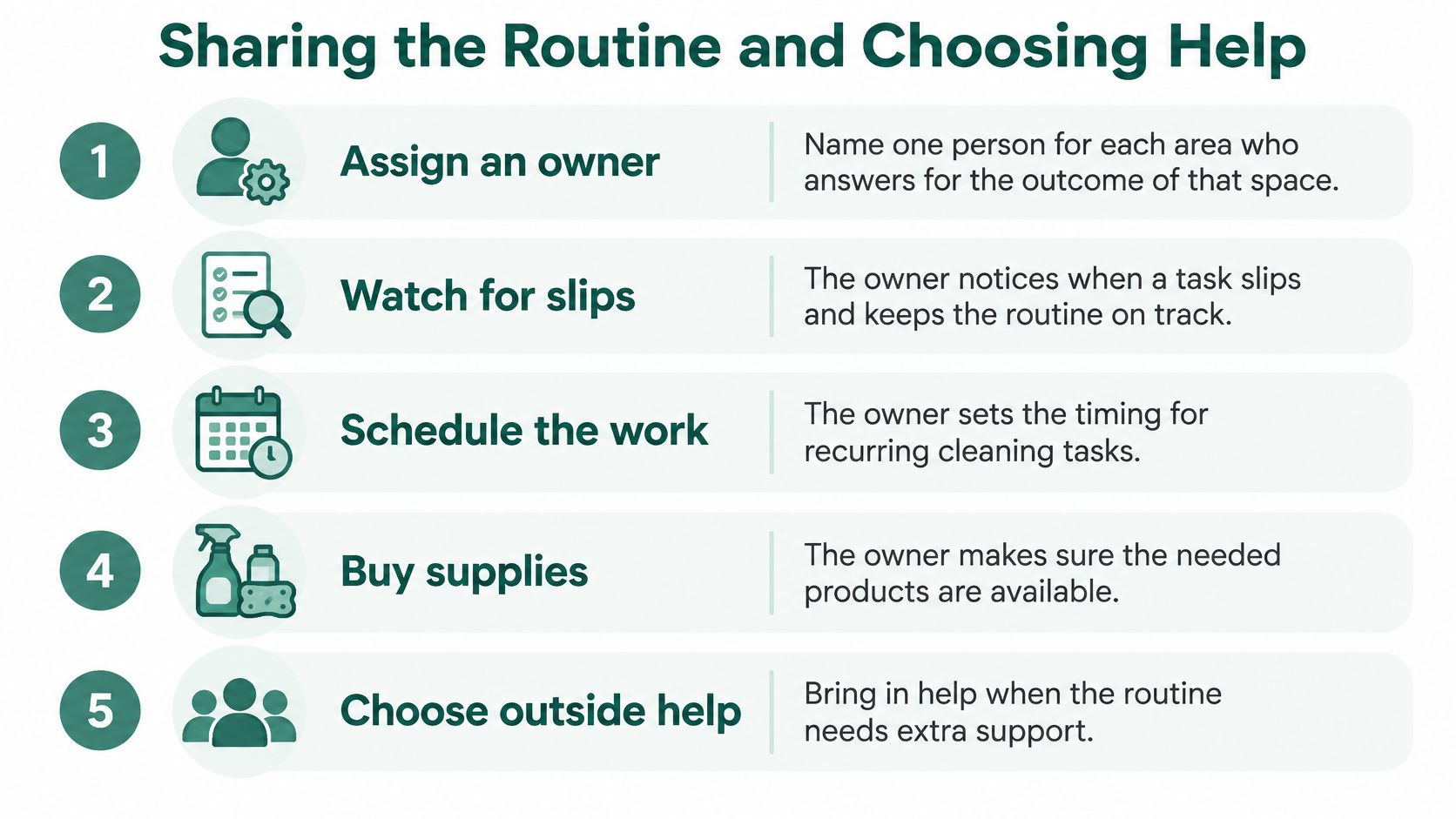
Set minimum standards anyone can check at a glance:
- Kitchen: No dishes left in the sink overnight, counters cleared before bed.
- Bathroom: Sinks wiped after use, toilet and mirror addressed on the twice-weekly day.
- Floors and clutter: Floors cleaned on the weekly day, shoes and mail kept to their assigned spots.
Rotate seasonal jobs so the spring deep clean doesn't land on the same person every year. That matters because the planning load is often uneven. A 2025 study of 3,000 U.S. parents summarized by the British Psychological Society found that for daily responsibilities such as cleaning and childcare, mothers handled 79% compared with 37% for fathers. Naming owners in writing turns invisible work into an agreed system.
Decide honestly at week three
If your household keeps daily and weekly tasks, start this weekend and refine as you go. If the weekly list still slips after three weeks, add recurring help for the heavy tasks instead of rewriting the chart again. Good questions to ask a house cleaner cover what's included, who brings supplies, and how recurring visits are scheduled.
Before any visit, pick up general surface clutter such as clothing, toys, and sensitive paperwork so paid time goes into cleaning. With us, Basic Cleaning starts at $205 as a one-time clean, and the homeowner does not need to be home during a weekly recurring cleaning.
Close with three actions tonight: print the schedule, block one evening for setup, and set the date of your first reset. Judge the system by week four. You should need fewer reminders, fewer negotiations, and fewer apologetic weekend marathons.
---
If your daily resets are working but the weekly block keeps slipping, Carmen Family Cleaning can take on recurring kitchen, bathroom, and floor maintenance in the Milwaukee area so your routine holds between visits. We bring our own HEPA vacuums, fresh microfiber cloths, and family-safe eco cleaners, and you don't need to be home while we work. Visit Carmen Family Cleaning to get a flat-rate quote and pick a schedule that fits your week.